ENGINEERING · 2026-06-10
Digital Twins in 2026: How FEA Simulation and AI Are Redefining Machine Design
A digital twin is no longer a buzzword — it's a working methodology that pairs FEA simulation with live sensor data and AI prediction. Here's how the convergence of ANSYS-grade simulation and machine learning is changing how machines are designed, validated, and maintained in 2026.
For decades, simulation and reality lived in separate worlds. You ran your FEA study, validated the design, and shipped it — and from that moment on, the model sat frozen on a hard drive while the physical machine aged, wore, and failed in ways the simulation never saw. The digital twin closes that loop: a living simulation model, continuously updated with real operating data, that evolves alongside the physical asset it mirrors.
What a Digital Twin Actually Is (and Isn't)
A digital twin is not just a 3D model, and it's not just a dashboard of sensor readings. It's the combination of three layers: a physics-based simulation model (the FEA/CFD backbone), a live data stream from the physical asset (temperatures, vibrations, loads, cycles), and an intelligence layer that compares predicted behavior against measured behavior — and learns from the gap.
- The simulation layer answers: how should this machine behave under these conditions?
- The data layer answers: how is it actually behaving right now?
- The AI layer answers: what does the difference mean, and what happens next?
Why FEA Is the Foundation, Not the Afterthought
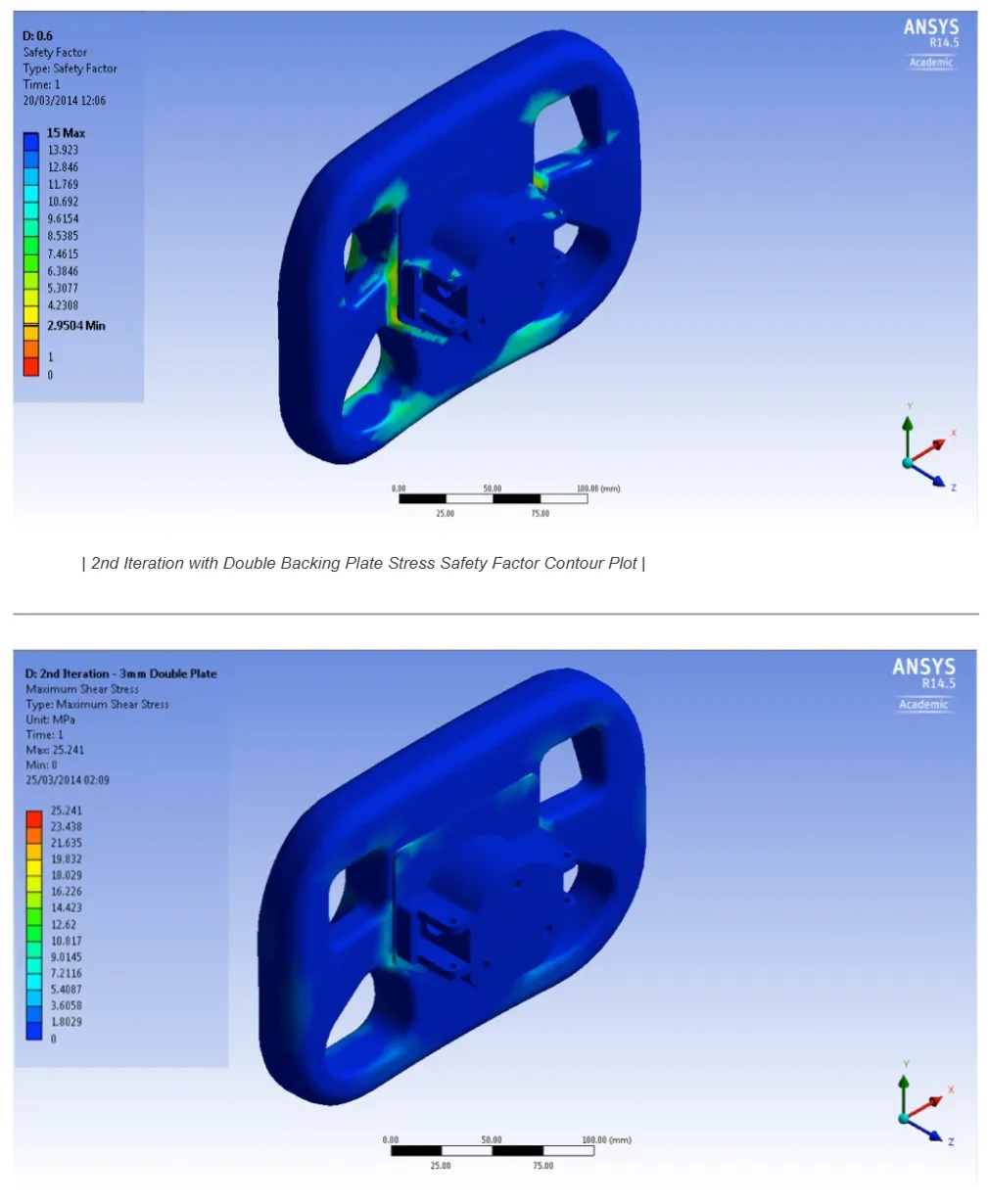
Machine learning alone can predict failures it has seen before — but it's blind to failure modes that aren't in the training data. That's where physics-based simulation earns its place. A validated ANSYS model knows where stress concentrates, how thermal gradients build, and which load combinations push a component toward yield, even if that scenario has never occurred in the field. The most reliable twins I've worked on use FEA results to teach the AI what 'dangerous' looks like before the machine ever experiences it.
Machine learning predicts what it has seen. Physics predicts what it hasn't. A digital twin needs both.
The Payoff: From Reactive Repairs to Predictive Maintenance
The economics are hard to argue with. Reactive maintenance means unplanned downtime at the worst possible moment. Scheduled maintenance means replacing parts that still had life left. Predictive maintenance — driven by a twin that tracks accumulated fatigue against the simulation's life model — means intervening exactly when the data says intervention is due. For rotating equipment, pumps, and structural components, that routinely translates into double-digit reductions in downtime and maintenance spend.
How to Start Without an Enterprise Budget
The good news for small and mid-size manufacturers: you don't need a million-dollar platform to benefit from this methodology. A practical starting point looks like the crawl-walk-run approach I recommend for any automation project — begin with one critical asset, one validated FEA model, and a handful of sensors on the parameters that matter.
- Crawl — build and validate a simulation model of your most failure-prone component, and benchmark it against historical failures.
- Walk — add affordable sensors (vibration, temperature, strain) and compare live readings against simulation predictions on a schedule.
- Run — automate the comparison with a lightweight ML layer that flags drift, estimates remaining useful life, and schedules maintenance.
This is exactly the kind of cross-domain project where my work lives: the FEA modeling in SolidWorks and ANSYS, the data pipeline and dashboard development, and the AI layer that ties them together. If your machines are still being maintained on a calendar instead of on evidence, a digital twin pilot is one of the highest-ROI engineering investments you can make in 2026.