RESEARCH · 2025-04-15
Big Data & Machine Learning in Economics and Finance Research
Dissertations and research projects demand more than spreadsheets. Using Python, statistical modeling, and ML techniques, I help researchers turn raw datasets into defensible insights — whether the domain is economics, finance, cyber security, or market behavior analysis.
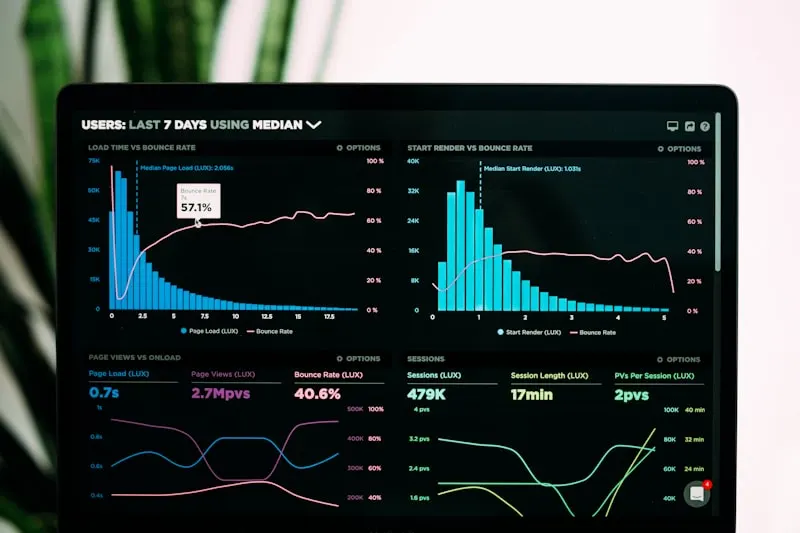
There's a moment in every data-driven dissertation where the spreadsheet gives up: the dataset has a million rows, the relationships are non-linear, and Excel's regression tool starts to feel like bringing a calculator to a physics exam. That's the moment modern research methods exist for.
From Raw Data to Research-Grade Datasets
Most of the real work in empirical research happens before any model runs. Financial time series come with missing values, survivorship bias, and structural breaks; economic panel data arrives in inconsistent formats across years and countries. Using Python — pandas for wrangling, statsmodels and scikit-learn for analysis — I build cleaning pipelines that are documented and reproducible, because a result you can't reproduce is a result you can't defend in a viva.
Choosing Methods That Match the Question
- Causal questions — panel regressions, difference-in-differences, instrumental variables: the econometric backbone.
- Predictive questions — gradient boosting, random forests, and regularized regression, validated out-of-sample.
- Classification problems — fraud detection, credit default, churn: precision-recall trade-offs made explicit.
- Time series — ARIMA and GARCH for volatility, with ML hybrids where the linearity assumption breaks down.
Machine learning doesn't replace econometrics in research — it answers a different question. Knowing which question you're asking is the methodology chapter.
Defensible Results, Not Just Impressive Ones
A dissertation result has to survive scrutiny: robustness checks, alternative specifications, and honest reporting of limitations. I work with researchers to stress-test findings before an examiner does — re-running models on subsamples, checking sensitivity to outliers, and making sure every figure in the final document can be regenerated from the raw data with one script.
Whether you're a graduate student facing a deadline or a researcher with a dataset that outgrew your tools, the goal is the same: turn raw data into insights you can stand behind — on time, and to the standard your field demands.